



Switching internet providers can help you find a better price, faster speeds, or a plan that fits your household. But before you leave your current provider, there are a few things worth checking: your contract, the cost of ending service, the timing of your new connection, and what happens to your rented equipment.
The process is easier when you know what to expect before contacting customer service. This guide explains how to switch providers, cancel an existing plan, avoid common billing surprises, and make sure your old account is properly closed.
Why Are You Switching or Canceling Internet?
Your reason for leaving affects the steps you should take. Someone moving to a new apartment has different priorities from someone trying to lower a monthly bill.
- Increased Bill: Check whether a promotional discount has expired and compare the current price with other available plans.
- Slow Connection: Determine whether the problem comes from your internet plan, connection technology, or home Wi-Fi before paying for a replacement service.
- Moving: Check whether your current provider serves your new address and whether transferring service makes sense.
- Better Service: Confirm the new plan’s total cost, installation requirements, and contract terms before committing.
- Don’t need Inernet: Find out when billing will stop and whether your account has any outstanding obligations.
If price is the main concern, compare your current plan with the options available at your address before making a final decision. Our guide to Understanding ISP Terminology & Contracts explains the pricing terms worth reviewing.
1. Check Your Contract Before Canceling
The first step is understanding what your current agreement requires. Canceling a service is not always as simple as requesting disconnection, particularly if you signed up with a promotional offer or a fixed-term commitment.
Contract length and early termination fees
Some internet plans do not have fixed-term commitment, while others may impose an early termination fee if you cancel before the agreed period ends. Check when your contract begins, when it expires, and whether a fee applies to your account.
For example, AT&T’s internet cancellation policy explains how early termination fees may apply to qualifying term commitments. Its policy is an example of one provider’s rules, not a universal cancellation policy.
Promotional Pricing and Discounts
An advertised monthly price may be temporary. Your regular price could increase after an introductory period, making another plan more attractive. Compare your current and post-promotion prices, bundle discounts, equipment rental and recurring fees, installation or activation charges, and any cancellation fees or remaining balances.
A lower advertised price does not necessarily mean a lower total cost.
Equipment and Outstanding Balances
Check whether your provider owns the modem, router, gateway, or other equipment installed in your home. You may need to return rented equipment after cancellation. Also review any outstanding balance or payment arrangement connected to the account.
2. Check Your New Provider Before Ending the Old Service
One of the most frustrating switching mistakes is canceling a working connection before confirming that the replacement is ready. Check whether the new provider offers service at your exact address; availability can vary between nearby streets and buildings.
Once you find a suitable option, confirm the following:
- Availability: Can the provider connect to your specific address?
- Installation: Is a technician's visit required, or can you activate the service yourself?
- Activation date: When will the connection actually be ready?
- Total cost: What will you pay after promotional pricing ends?
- Equipment: Will you need a new modem, router, or gateway?
- Contract terms: Is there a minimum commitment or an early termination fee?
If you’re unsure which connection technology fits your needs, our guide to Understanding Internet Connection Types explains the main options and their differences.
Should you cancel before or after installing the new internet?
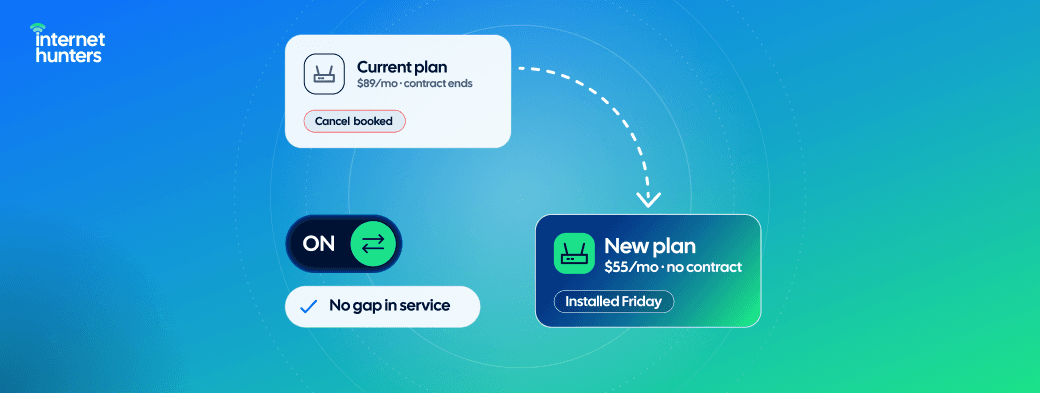
For most households that need uninterrupted service, confirm the replacement connection first and coordinate the cancellation date with its activation. If installation is required, schedule it before your old service ends whenever possible. Test the new connection before relying on it for work, school, video calls, or other essential activities.
You might temporarily pay for two connections, depending on your billing cycles. That can be preferable to being without internet but check both providers’ terms so you understand the cost of any overlap. If you’re moving, the timing may depend on when you leave the old property and when you can access the new one.
3. How to Cancel Your Current Internet Service
Once you’ve reviewed your contract and made arrangements for your next connection, request cancellation. The exact process depends on your provider. Some offer online account tools, while others require the account holder to call customer service. Follow the cancellation instructions for your particular service.
Step 1: Prepare Your Account Details
Have your account number and any required account verification information ready. Confirm whether the account holder must submit the request. If your internet is bundled with television, phone, or another service, ask how canceling the internet will affect the remaining services and discounts.
Step 2: Make a Clear Cancellation Request
Tell the provider that you want to cancel your internet service and specify your preferred disconnection date. You may be offered a different plan or discount. Consider it if it genuinely meets your needs, but you don’t have to accept it simply because it is presented during the cancellation process.
Step 3: Confirm the Cancellation Details
Before ending the conversation, ask for confirmation of:
- The date your service will stop.
- Any applicable early termination fee.
- Whether additional service charges may appear.
- Which equipment you must return and when.
- How you’ll receive confirmation of the cancellation.
Keep the confirmation number, email, or other records associated with your request.
Step 4: Verify that The Service Has Ended
Don’t assume that submitting a request automatically means your account has been closed. Check the effective date and review your account afterward. If the provider continues charging you beyond the agreed cancellation date, contact it with your confirmation details and ask for the charges to be investigated.
The FTC’s guidance on canceling services explains why documenting cancellation attempts and checking subsequent statements can be important.
4. Return Your Internet Equipment
Equipment returns are easy to overlook. Depending on your plan, your provider may require you to return a rented modem, router, gateway, or Wi-Fi extender after service ends. Failing to return required equipment on time can result in additional charges.
Identify What Belongs to Your Provider
Check your account or contact customer service to determine which items need to be returned. Don’t assume that everything connected to your internet service belongs to the provider.
For example, AT&T’s equipment-return instructions identify devices that must be returned and explain that certain wall-mounted equipment should remain in place. Your provider may have different requirements.
Follow the Return Instructions
Your provider may offer shipping, a prepaid return label, or an authorized drop-off location. Follow the instructions associated with your account.
For another provider’s process, see Xfinity’s equipment-return guide. Requirements can vary by provider and device.
Keep Proof That You Returned It
Save your shipping receipt, tracking information, or in-person return confirmation. If a charge later appears for equipment you already returned, these records can help you dispute it.
5. Understand Your Final Internet Bill
Canceling your service doesn’t necessarily mean you’ll never receive another bill. Your provider may still need to settle the account, apply for outstanding charges, or process an eligible refund. Your final statement could include charges for service provided before disconnection, an applicable early termination fee, unreturned or damaged equipment, outstanding balances, or credits and refunds.
The amount and timing depend on your provider’s billing policy and your agreement.
Will You Pay for the Whole Month If You Cancel Early?
Not necessarily, but you shouldn’t assume that your bill will be prorated. Some providers adjust charges according to the date of service ends, while others may charge the full billing period under their terms. Check out the policy before choosing your cancellation date.
What If Your Final Bill is Higher Than Expected?
Review the statement against your contract, cancellation confirmation, and equipment return records. If you don’t recognize a charge, ask the provider for an itemized explanation. If you believe a fee is incorrect, explain why and request a review.
If the issue remains unresolved after contacting the provider, explore the FCC’s internet complaint process for applicable service or billing complaints. Keep copies of relevant bills, messages, and confirmations until the matter is resolved.
6. What If Your Provider Makes Cancellation Difficult?
A provider may offer retention discounts, transfer you between departments, or ask why you’re leaving. These conversations can take time, particularly when you’re coordinating a move or new installation. Prepare a clear request so you can keep the process focused.
“I’d like to cancel my internet service effective [date]. Please confirm the disconnection date, any applicable fees, the equipment-return requirements, and how I’ll receive written confirmation.”
If your cancellation isn’t processed, ask what remains outstanding and request a reference number. Keep a record of the date, instructions received, and any promised follow-up.
If you continue to be billed after the confirmed cancellation, use those records when requesting an investigation. The applicable agreement and consumer protection rules may differ depending on the service and circumstances.
7. Should You Switch, Transfer, or Cancel Entirely?
The best option depends on whether you’re leaving your current provider, changing your address, or ending service altogether.
| Situation | What to Consider |
|---|---|
| Switching to another provider | Confirm the replacement connection and coordinate the cancellation date. |
| Moving to a new home | Check availability at the new address and ask whether transferring your service makes sense. |
| Leaving a rental property | Confirm when you’re responsible for service at the old address and arrange the appropriate end date. |
| Trying to lower your bill | Compare the full cost of available plans before deciding to leave. |
| Temporarily leaving home | Ask whether your provider offers a suspension or seasonal service option. |
| Ending internet service | Confirm cancellation, return required equipment, and settle the final account balance. |
If you’re moving, check the new address before assuming your current provider can transfer service. A plan that works well at your current property may not be available at your next one.
Make Your Next Internet Decision with Confidence
Switching providers is about more than ending an old contract. It’s about making sure the next connection fits your address, budget, and household needs without creating unnecessary problems along the way.
Internet Hunters helps consumers understand internet technologies, provider terms, pricing, and the practical details behind choosing a home internet plan. Explore our internet guides and resources to learn more before making your next decision.
The more you understand before signing up or canceling, the easier it becomes to choose an internet service that works for you.
Frequently Asked Questions
Can I switch to internet providers without canceling my current service first?
You can arrange a new connection before canceling your existing one. For households that need uninterrupted access, coordinating the new activation with the old disconnection is generally safer. Check both providers’ billing and installation terms to understand any overlap in cost.
Will I have to pay an early termination fee?
It depends on your service agreement. Some plans do not have fixed-term commitment, while others may charge a fee for canceling before the commitment ends. Review your contract and ask your provider to confirm the amount applicable to your account.
Do I need to return my modem and router?
If you rent equipment from your provider, you may need to return it. Requirements vary by provider and device, so confirm which items must be returned, the deadline, and the approved return method. Keep proof of the return.
Can I cancel my internet service when I move?
You can request cancellation when moving but check whether transferring your service is an option first. If you need internet at your new home, confirm availability and installation timing before arranging the old connection end date.
Why am I still receiving bills after canceling the internet?
A final bill may include charges that are accrued before disconnection, an applicable termination fee, or equipment charges. If you receive another bill after the account should have closed, contact the provider and ask it to explain the charges and verify the cancellation date.
What should I do if my provider won’t process my cancellation?
Ask the provider to explain what is preventing the request from being completed. Keep records of your attempts, reference numbers, and written confirmation. If the problem involves continued billing or another unresolved consumer complaint, consider contacting the relevant regulatory or consumer protection agency.


